
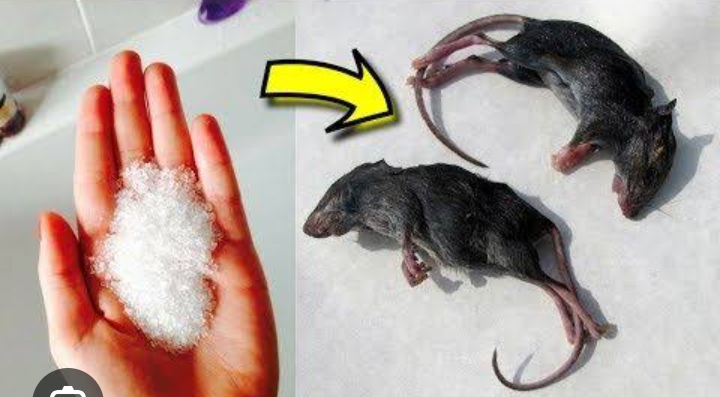
Salt is not only useful in the kitchen but can also serve as a natural way to help control common household pests such as cockroaches, rats, and bedbugs. Even though salt alone may not completely eliminate these pests, it can still play an important role when combined with other control methods.
Cockroaches are known to be very resilient, but salt can still work as a deterrent. Since salt has the ability to dehydrate them, it can eventually lead to their death.
One simple method is to mix salt with water to make a saline solution and spray it around areas where cockroaches are usually seen, such as kitchen counters, under sinks, or inside cabinets. This discourages them from moving into those spaces.
Another approach is to sprinkle dry salt directly into corners, cracks, and hiding spots, making those places less comfortable for cockroaches. For stronger results, salt can be mixed with boric acid.
When cockroaches eat this mixture, it dries them out and disrupts their digestive system. However, boric acid must be handled carefully because it is dangerous to children and pets.
Rats, on the other hand, are not directly harmed by salt, but it can still help keep them away when combined with other substances.
A useful method is to mix salt, ammonia, and water, then spray this solution in areas where rats are likely to pass. Rats dislike the strong smell of ammonia and will avoid those places.
Salt can also have an effect on bedbugs. Sprinkling it around mattresses, bed corners, and other hiding spots can reduce their activity. The salt works by drying them out, making survival more difficult.
Salt is an affordable and natural way to help in the fight against pests. It may not be powerful enough to completely clear an infestation on its own, but when used with other treatments, it can make your home far less attractive to cockroaches, rats, and bedbugs. Care should always be taken when mixing salt with stronger chemicals to ensure safety for the whole household.