
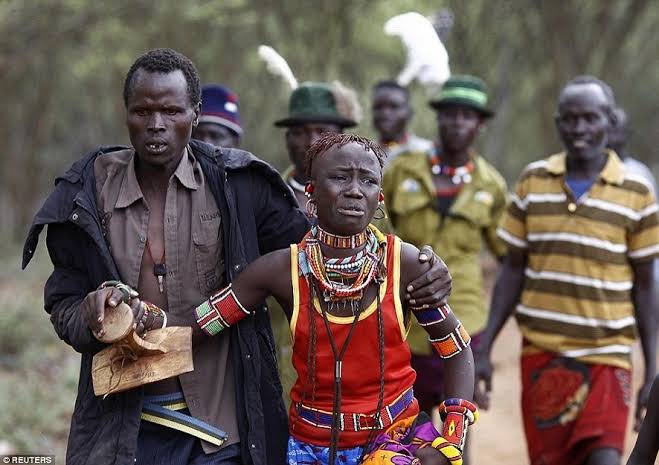
Imagine living in a community where a man who falls in love with a woman may not simply approach her, propose marriage and wait for her answer. Instead, there is a traditional practice in which a man may attempt to take the woman he wants to marry without following the usual courtship process.
It sounds unbelievable, but forms of bride kidnapping have been documented in different parts of Africa. These practices are often connected to traditional marriage customs, family arrangements, bridewealth and cultural beliefs that have existed for generations. However, it is important to understand that such traditions are not the same everywhere, and a cultural practice should never be mistaken for permission to force someone into marriage.
## **The Latuka People of South Sudan**
One of the communities associated with this unusual marriage tradition is the **Latuka people**, also known as the Otuho. They live mainly in Eastern Equatoria, in South Sudan.
The Latuka are known for their traditional way of life, farming activities and cattle keeping. Their communities have historically maintained distinctive customs surrounding marriage, family relationships and community leadership.
One marriage practice attributed to some traditional Latuka communities has attracted considerable attention because of its unusual approach to courtship.
According to accounts published by African media outlets, when a young man identifies a woman he wishes to marry, he may arrange for a group of men to help him capture her and take her to his home.
Rather than beginning with the familiar process of formally approaching the woman’s family, the reported custom begins with the act of taking the woman.
## **What Happens After The Woman Is Taken?
The accounts describe the young woman being taken to the man’s home, after which he visits her family with older male relatives to discuss the proposed marriage.
The woman’s father is then approached for his blessing.
Interestingly, some accounts describe a rather unusual response when the father agrees to the marriage: he is expected to beat his prospective son-in-law as part of the traditional ceremony.
This reported act is sometimes interpreted as a demonstration of the man’s willingness to endure hardship and make sacrifices for the woman he wants to marry.
However, these details come mainly from media descriptions of the custom, and they should not be assumed to represent the experience of every Latuka family.
## **What If The Woman’s Father Refuses?**
This is perhaps the most controversial part of the accounts surrounding the tradition.
Some reports claim that if the woman’s father rejects the marriage proposal, the man may decide either to return the woman to her family or proceed with the marriage regardless of the father’s decision.
This raises serious questions about the woman’s freedom to choose her husband.
It is important to remember that a father’s approval is not a substitute for the woman’s consent. A woman has the right to decide whether she wants to marry someone, regardless of what a traditional ceremony or family arrangement might suggest.
## **Is Bride Kidnapping Still Practised Today?**
Although stories about the Latuka marriage tradition continue to circulate, it would be misleading to suggest that every Latuka man follows this practice today or that all women in the community are married through abduction.
Marriage customs change over time, and communities are not frozen in their past.
Bride abduction has also been documented in other African communities, including parts of Ethiopia and South Sudan. A 2024 research paper by economists Jorge García-Hombrados and Lindsey Novak examined the practice in Ethiopia, finding that it can be connected to family opposition, bride-price negotiations and economic pressures.
In South Sudan, researchers have also documented much more violent cases in which armed men abduct girls and women for forced marriage. These cases demonstrate the serious consequences of treating women as individuals whose marriage decisions can be made by others.
What Does The Law Say?
Traditional customs do not automatically override individual rights.
The African Committee of Experts on the Rights and Welfare of the Child and the African Commission on Human and Peoples’ Rights have made it clear that abduction for marriage, particularly involving children, must be prohibited. Their guidance also stresses that marriage requires the full and free consent of both parties.
Ultimately, the story of the Latuka people offers an opportunity to understand how different societies have approached marriage throughout history.
However, cultural understanding should never mean defending forced marriage. Traditions can be respected, studied and preserved while harmful practices are questioned and changed.
**The most important part of any marriage should always be the willingness of both people to choose each other.**