
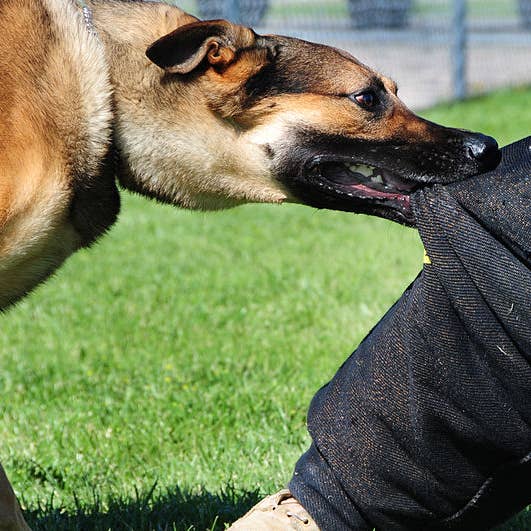
Are you afraid whenever a large dog approaches you? Do you immediately think about running away whenever you encounter an aggressive-looking dog? If so, you are not alone. Many people become frightened when they see a dog behaving aggressively, especially when it starts barking, growling or running towards them.
However, what you do in those few seconds can make a significant difference.
Running away may trigger a dog’s instinct to chase, while screaming, waving your arms or making sudden movements could make an already tense situation worse.
The most important thing is to remain as calm as possible, avoid provoking the animal and protect yourself if it attempts to attack.
Here are seven important things you should do if an aggressive dog approaches or attacks you.
## 1. Do Not Run Away
One of the biggest mistakes you can make when an aggressive dog approaches you is turning your back and running.
Although running away may feel like the easiest way to escape, it can encourage the dog to chase you. Dogs are naturally capable of running faster than humans over short distances, making it difficult to outrun one.
Instead, try to remain calm. Avoid sudden movements and do not turn your back on the animal.
If the dog is approaching but has not attacked, slowly move away while keeping the dog in sight. Do not stare directly into its eyes or make threatening gestures.
Your goal is to create distance without triggering a chase.
## 2. Avoid Screaming or Making Sudden Movements
When people become frightened, their natural reaction may be to scream, wave their hands or start moving around uncontrollably.
Unfortunately, these reactions can sometimes make an aggressive dog more excited or defensive.
Instead, try to control your movements and use a calm, firm voice if necessary.
You can say commands such as “No!” or “Stay!” without screaming.
Avoid kicking, hitting or provoking the animal unless you need to defend yourself against an immediate attack.
Remember that the goal is not to frighten or challenge the dog but to prevent the situation from escalating.
## 3. Put Something Between Yourself and the Dog
If you notice that the dog is becoming aggressive, look for something you can use as a barrier.
This could be a backpack, handbag, jacket, umbrella, bicycle or any other object within reach.
Place the object between yourself and the dog to create some protection.
If the dog attempts to bite, it may go for the object instead of your body.
Do not deliberately approach the dog with a stick or other object to threaten it. However, if you already have something that can serve as a barrier, use it to protect yourself.
If you fall, try to keep the object between you and the animal.
## 4. Avoid Making Direct Eye Contact
Staring directly into an unfamiliar dog’s eyes may be interpreted as a threatening gesture, particularly when the animal is already showing signs of aggression.
Instead, keep the dog within your peripheral vision while slightly turning your body sideways.
This position may make you appear less confrontational while allowing you to monitor the dog’s movements.
Do not completely turn your back or lose sight of the animal.
Also, avoid bending down suddenly, reaching towards the dog or attempting to touch it.
## 5. If the Dog Attacks, Protect Your Face, Neck and Head
If the dog actually attacks and you cannot escape, your priority should be protecting the most vulnerable parts of your body.
Your face, neck, head and hands can suffer serious injuries during a dog attack.
If you are knocked to the ground, curl into a ball, tuck your chin towards your chest and use your arms and hands to protect your head, ears and neck.
Try to remain as still as possible rather than struggling unnecessarily.
If you are carrying a bag or jacket, use it as a barrier if you can do so safely.
Do not attempt to pull away violently if the dog has bitten you, as this may worsen the injury.
## 6. Try to Get Help From the Dog’s Owner or Other People
If the dog’s owner is nearby, call for help and ask them to control their animal.
If other people are around, alert them to the danger.
However, do not assume that the owner will immediately be able to control an aggressive dog.
Avoid approaching the animal’s owner if doing so would bring you closer to the dog.
Your safety should always come first.
## 7. Seek Medical Attention Immediately After a Bite
Even if a dog bite appears small, it should never be ignored.
Dog bites can introduce bacteria into the body and cause serious infections. There is also the risk of rabies, a potentially fatal viral disease that can spread through the saliva of an infected animal.
If a dog bites you, take the following steps:
– Immediately wash the wound thoroughly with soap and running water for at least 15 minutes.
– Apply gentle pressure with a clean cloth if there is bleeding.
– Seek medical attention immediately, even if the wound appears minor.
– Ask a healthcare professional about rabies post-exposure treatment and whether you need a tetanus vaccination.
– If possible, obtain information about the dog and its vaccination status without putting yourself in danger.
Do not wait for symptoms of rabies to appear before seeking medical attention. Once symptoms develop, rabies is almost always fatal.
## What You Should Never Do When an Aggressive Dog Approaches You
There are certain reactions you should avoid because they could increase your chances of being bitten.
1. Do not run away or turn your back on the dog.
2. Do not scream or wave your arms aggressively.
3. Do not attempt to pet or feed an unfamiliar aggressive dog.
4. Do not corner the animal or block its escape route.
5. Do not deliberately provoke it with stones, sticks or other objects.
6. Do not attempt to separate fighting dogs with your bare hands.
## Final Thoughts
Encountering an aggressive dog can be frightening, but knowing how to respond may help prevent serious injuries.
The most important things to remember are to avoid running, remain as calm as possible, slowly create distance and use available objects as barriers.
If the dog attacks, protect your head, face and neck. If you are bitten, wash the wound immediately and seek urgent medical attention because of the risk of infection and rabies.
Remember, no technique can guarantee that an aggressive dog will leave you alone. Your priority should always be to protect yourself, avoid provoking the animal and get medical help if an attack occurs.