
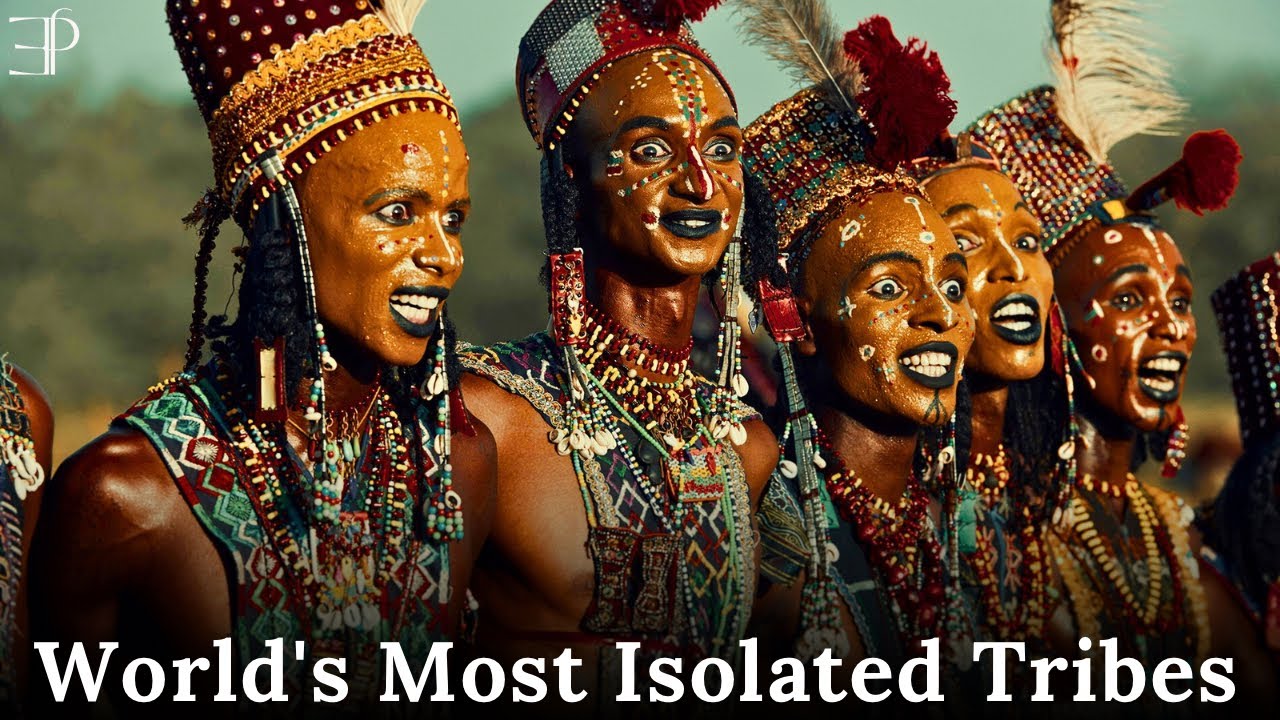
Deep inside the forests of Central Africa are communities whose traditional ways of life are remarkably different from those of people living in modern cities. Some of these communities have limited contact with the outside world and continue to depend heavily on forests for food, shelter, medicine, and survival.
One group often associated with this traditional forest lifestyle is the Mbuti people of the Democratic Republic of the Congo. The Mbuti are Indigenous hunter-gatherers who traditionally inhabit the Ituri Forest, one of the largest tropical rainforest regions in Central Africa. For generations, they have depended on the forest for almost everything they need to survive.
Unlike people in modern cities, traditional Mbuti communities have historically relied on hunting, fishing, and gathering wild fruits, vegetables, honey, and other forest resources. Their deep knowledge of the forest allows them to identify edible plants, recognise animal tracks, and navigate difficult environments.
**How Do They Live Without Modern Technology?**
Traditional Mbuti communities have developed ways of surviving without depending on many modern conveniences. They build temporary shelters using branches and large leaves, creating small homes that can be constructed relatively quickly.
Hunting is also an important part of their traditional lifestyle. Some hunters use nets, bows, and arrows to catch animals, while others work together to organise hunting activities. Cooperation is essential because sharing food helps strengthen relationships within the community.
Their knowledge of medicinal plants is another important part of their forest lifestyle. They have traditionally used different plants and natural materials for various purposes, passing this knowledge from one generation to another.
**Why Are They Considered One of Africa’s Most Isolated Communities?**
The dense Ituri rainforest has historically made transportation and communication with the outside world difficult. For centuries, many Mbuti communities maintained their traditional lifestyles with limited access to modern infrastructure.
However, it would be inaccurate to describe all Mbuti people as completely isolated. Today, many have contact with neighbouring communities, participate in trade, and interact with modern society. Their circumstances also differ from one community to another.
**Are They Really Dangerous?**
Stories about isolated African tribes sometimes describe them as dangerous or hostile to outsiders. However, there is no reliable basis for labelling the Mbuti people as a dangerous tribe.
Like other communities, they have their own customs, social boundaries, and ways of protecting their families and territories. Visitors must respect their traditions and should never assume that their different lifestyle makes them threatening.
**The Challenges They Face Today**
Despite their remarkable knowledge of the forest, Mbuti communities face serious challenges. Deforestation, commercial exploitation of natural resources, discrimination, land pressures, and insecurity in parts of the Democratic Republic of the Congo threaten their traditional way of life.
Their relationship with the forest is deeply important, not only for their survival but also for their cultural identity.
The Mbuti people demonstrate that human beings can develop sophisticated ways of living and surviving without depending on many of the technologies found in modern cities.
Their story is not simply about living without smartphones, electricity, or modern houses. It is also about traditional knowledge, cooperation, cultural identity, and a deep understanding of the natural environment.